CT3 Announces Partnership with Junipa Limited to Power Scientific Data Archiving

Rodrigo Pereira
Chief Marketing Officer
Where Science Meets Decentralized Storage
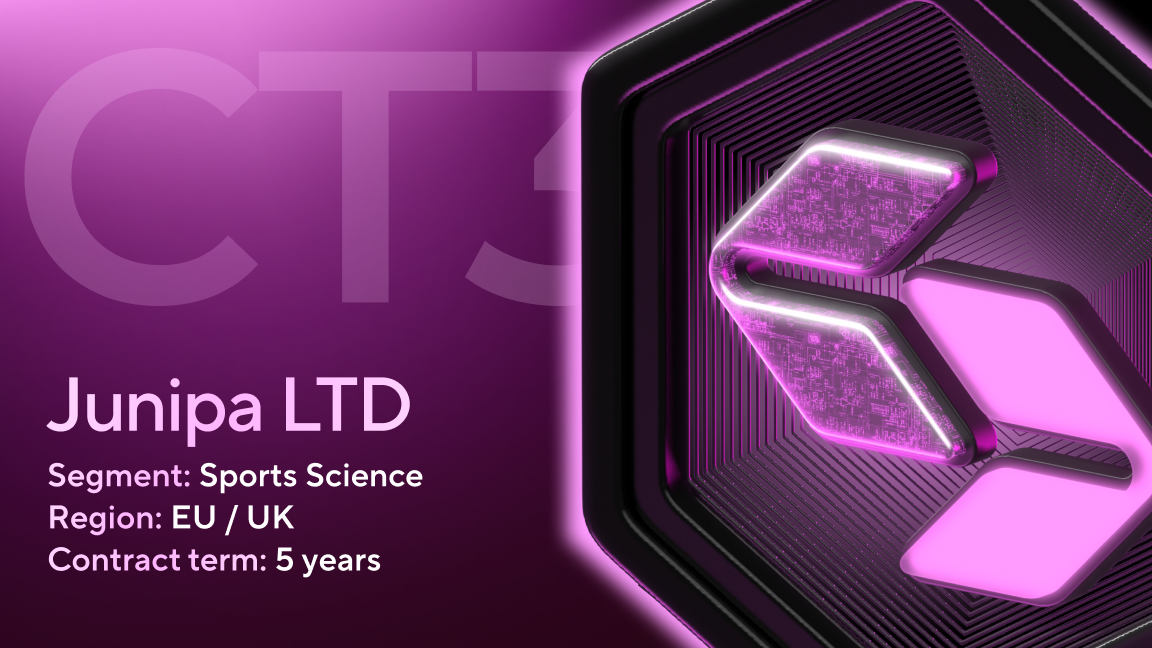
We are pleased to announce the start of a partnership between CT3 and Junipa Limited, a UK-based research and advisory company focused on advancing sports nutrition and human performance science. This collaboration is centered on building a reliable, long-term storage layer for Junipa’s growing body of scientific and research-related data.
As research workflows become increasingly data-intensive, the need for secure, structured, and scalable storage is no longer optional — it is foundational. Through this partnership, CT3 will provide decentralized infrastructure designed to support both archival integrity and controlled access to sensitive scientific materials.
Scientific Data Storage at Scale
Within the scope of this collaboration, Junipa will utilize CT3 Secure Storage to host a wide range of scientific and near-scientific archives. These include raw research datasets, laboratory exports, HPLC analytical results, and materials related to muscle biopsy analysis.
In addition, the storage layer will support drafts of publications, internal research reports, conference materials, formulation R&D documentation, regulatory notes, and scientific correspondence.
This type of data is often fragmented across multiple systems, making long-term preservation and structured access increasingly complex. CT3 addresses this by combining encrypted file storage with decentralized distribution, ensuring that critical research data remains accessible, verifiable, and protected over time.
Archiving Research Workflows and Documentation
Beyond raw scientific data, the partnership also includes comprehensive archiving of research workflows and supporting documentation. This covers presentation versions, abstracts, datasets, agreements, review comments, ethics-related paperwork, and supplementary files used across research and publication processes.
Conference-related assets — including speaker materials and sponsor packs — as well as publication drafts and iteration histories will also be stored within the CT3 infrastructure.
By consolidating these materials into a unified storage layer, Junipa gains a structured and traceable archive that supports both internal operations and external collaboration, without relying on fragmented centralized tools.
Decentralized Access and Data Ownership
CT3’s architecture introduces a different approach to data access management. Files are encrypted, split into multiple parts, and distributed across decentralized storage nodes. Access to each file is controlled via NFT-based keys, linking ownership of access rights directly to blockchain logic.
This model allows Junipa to maintain clear control over who can retrieve specific datasets or documents, while also enabling transparent and auditable storage interactions.
Such an approach is particularly relevant for scientific environments, where data integrity, controlled access, and long-term reproducibility are critical.
Expanding Use Cases in Research and R&D
This partnership represents another step in CT3’s expansion into research and R&D-driven use cases. Scientific organizations increasingly require infrastructure that can handle both large volumes of data and complex access requirements — from long-term archival storage to selective data sharing.
By working with Junipa, CT3 continues to demonstrate how decentralized storage can support real-world scientific workflows, offering an alternative to traditional cloud solutions while maintaining flexibility, security, and scalability.
As the volume and importance of research data continue to grow, partnerships like this highlight the evolving role of decentralized infrastructure in shaping the future of scientific data management.